How to get great photos of your surf session
Plenty of surfers have had the session of the month and no picture of it. Good surf photos rarely happen by accident. They come from surfing where and when photographers actually work, being easy to pick out in the line-up, riding in a way that reads on camera and agreeing the details with the photographer beforehand. This guide covers each of those, plus how to respect the photographer's rights and how to find your photos once you are out of the water.
Surf where and when photographers work
Surf photographers go where the light and the waves are reliable. That usually means well-known, consistent spots with a good vantage point on land or a channel to shoot from, and sessions early in the morning or late in the afternoon, when the light is soft and low. On many coasts the wind is also lighter in the morning, because the sea breeze only builds once the land warms up, so wave faces are cleaner and, with an offshore wind, spray blows off the crest.
If you want pictures, those are the sessions to aim for. A dawn session at the main peak of a well-known beach gives you far better odds than a midday session at a quiet corner with nowhere to shoot from. Notice where photographers stand or float at your local break and which days they turn up: usually when the swell is clean, not on blown-out afternoons.
Make yourself easy to spot
From the beach, a line-up of black wetsuits and white boards all looks alike, especially through a long lens. After the session, when a photographer goes through thousands of frames or you ask them to find you, anything distinctive helps.
- Colour A bright or patterned board, a coloured rash vest over the wetsuit, a distinctive hood or cap, or a wetsuit with coloured panels. Tell the photographer what to look for.
- Position Sit where waves are ridden in view of the camera, usually the main peak rather than the far edge of the line-up. That doesn't override etiquette: wait your turn like everyone else.
- Timing Note when you paddled out and when you came in. It narrows the search for both you and the photographer.
Pick waves that photograph well, then commit
A photo freezes a fraction of a second, so it shows the peak of a manoeuvre rather than the whole ride. Waves with an open face, where you can set up a bottom turn and hit the lip, photograph far better than closeouts or mushy sections, so let the closeouts go and wait for the ones with shape.
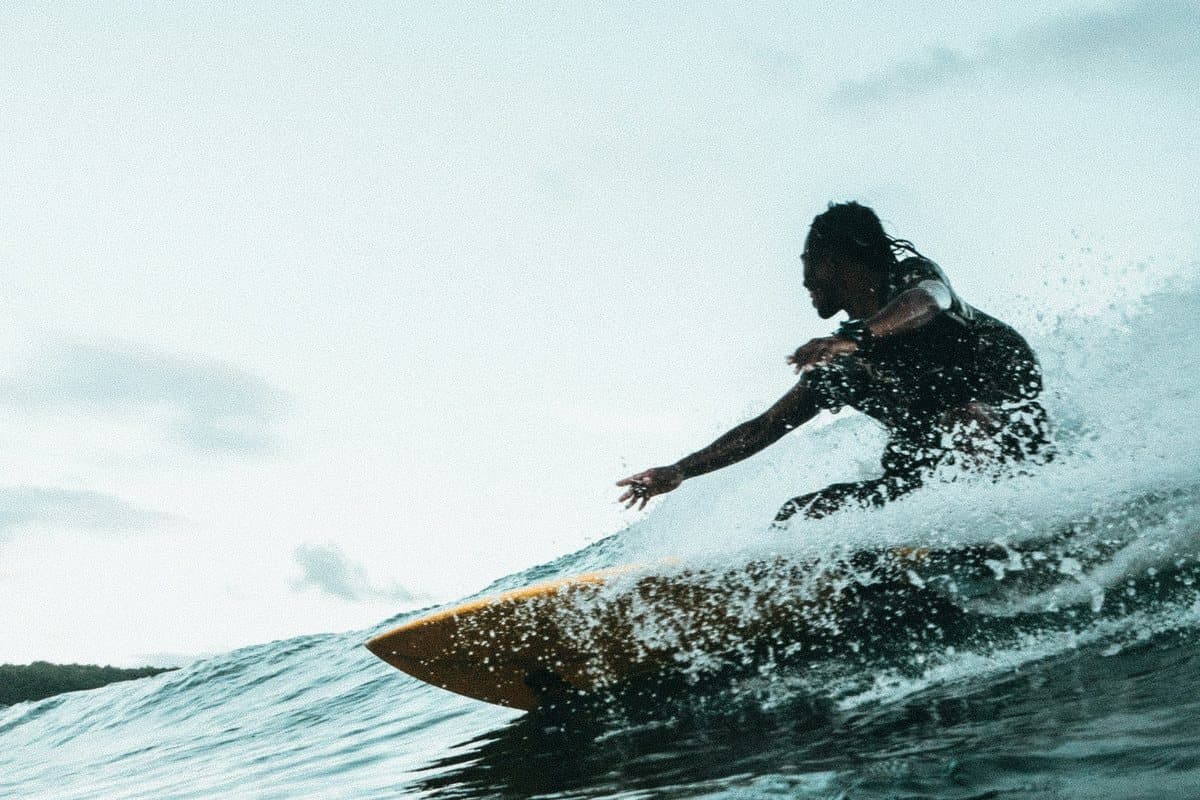
On the wave, commit. A half-hearted turn looks like nothing in a still frame; a committed one, knees bent, weight over the rail, shoulders leading and eyes on where you are going, looks like surfing. Spray helps: a hard turn in an offshore wind throws a fan of water that makes the shot. Look ahead rather than at your feet and, when the wave allows it, ride towards the photographer, since a surfer coming at the camera shows their face with the wave behind.
Talk to the photographer before you paddle out
If you want photos of yourself, ask. Find the photographer on the beach before your session, or book one in advance, and make the basics clear so nobody is disappointed afterwards:
- How to recognise you Board, wetsuit, colours and roughly where you will sit.
- Where they will be On land or in the water, which peak and for how long, so you can surf where they can see you.
- What you will get A number of photos or a block of time, edited or not, stills or video, and when they will be delivered.
- Price and use What it costs, what that covers, whether you can post the photos and how to credit them.
Respect the photographer's rights
Being in a photo doesn't make it yours. In most countries the photographer owns the copyright from the moment the picture is taken, with no registration needed. When you buy a photo you normally buy a licence to use it, usually for personal use and social media, not the copyright itself.
In practice: don't screenshot previews or crop out watermarks, credit or tag the photographer when you post, and ask before any commercial use, such as passing a photo to a sponsor, a surf school or a brand. If you want to use a photo in a way your agreement doesn't cover, ask first.
How to find your photos after the session
If you arranged nothing in advance, you can still find pictures, and it pays to look soon after the session.
On Makai, surfers can post a plan with their dates so photographers can find them, and see previews from photographers who shot the same beach and hour.
- Ask on the beach If you saw someone shooting, walk over after your session, tell them what you were wearing and when you were out, and ask how they share photos.
- Check local photographers Many post galleries or stories tagged with the name of the beach or spot.
- Search by beach and date Some apps and websites let photographers upload sessions by location and time so surfers can browse them. Your paddle-out and exit times narrow the search.
- Surf schools and camps Many work with a photographer who shoots their students; ask at the school.
Frequently asked questions
Do I own a surf photo if I'm the one in it?
No. In most countries the photographer owns the copyright automatically. Buying a photo normally gets you a licence to use it, typically for personal use and social media with credit. Commercial uses, such as giving it to a sponsor or a brand, usually need the photographer's explicit permission.
What should I wear to stand out in surf photos?
Anything that differs from the black wetsuits around you: a bright rash vest, a coloured hood, a board with a strong colour or pattern. The point is to be recognisable in a crowded line-up and across hundreds of frames, so tell the photographer what to look for.
What time of day is best for surf photos?
Usually early morning and late afternoon, when the light is soft and low and, on many coasts, the wind is lighter. Midday light is harsher and flattens the wave. The best hour also depends on which way the beach faces, because the sun's position decides whether you are front-lit or backlit.
How long does it take to get photos after a session?
It depends on the photographer. Many publish previews soon after the session, while full-resolution edited files can take longer. If you booked, agree a delivery time beforehand; if you didn't, ask the photographers you meet on the beach how and when they publish.