Aljezur, Costa Vicentina · Portugal
Surfing Praia da Arrifana
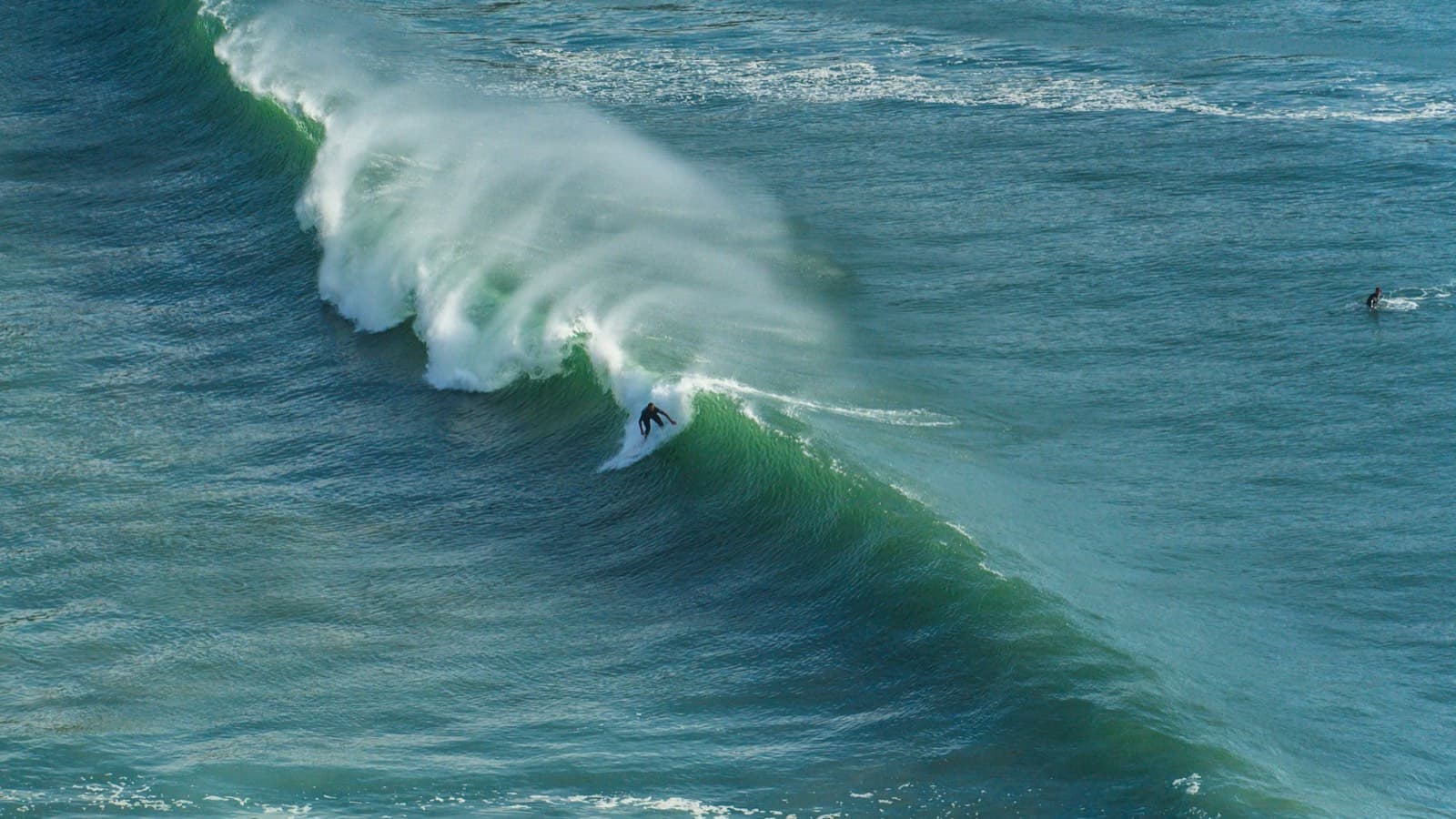
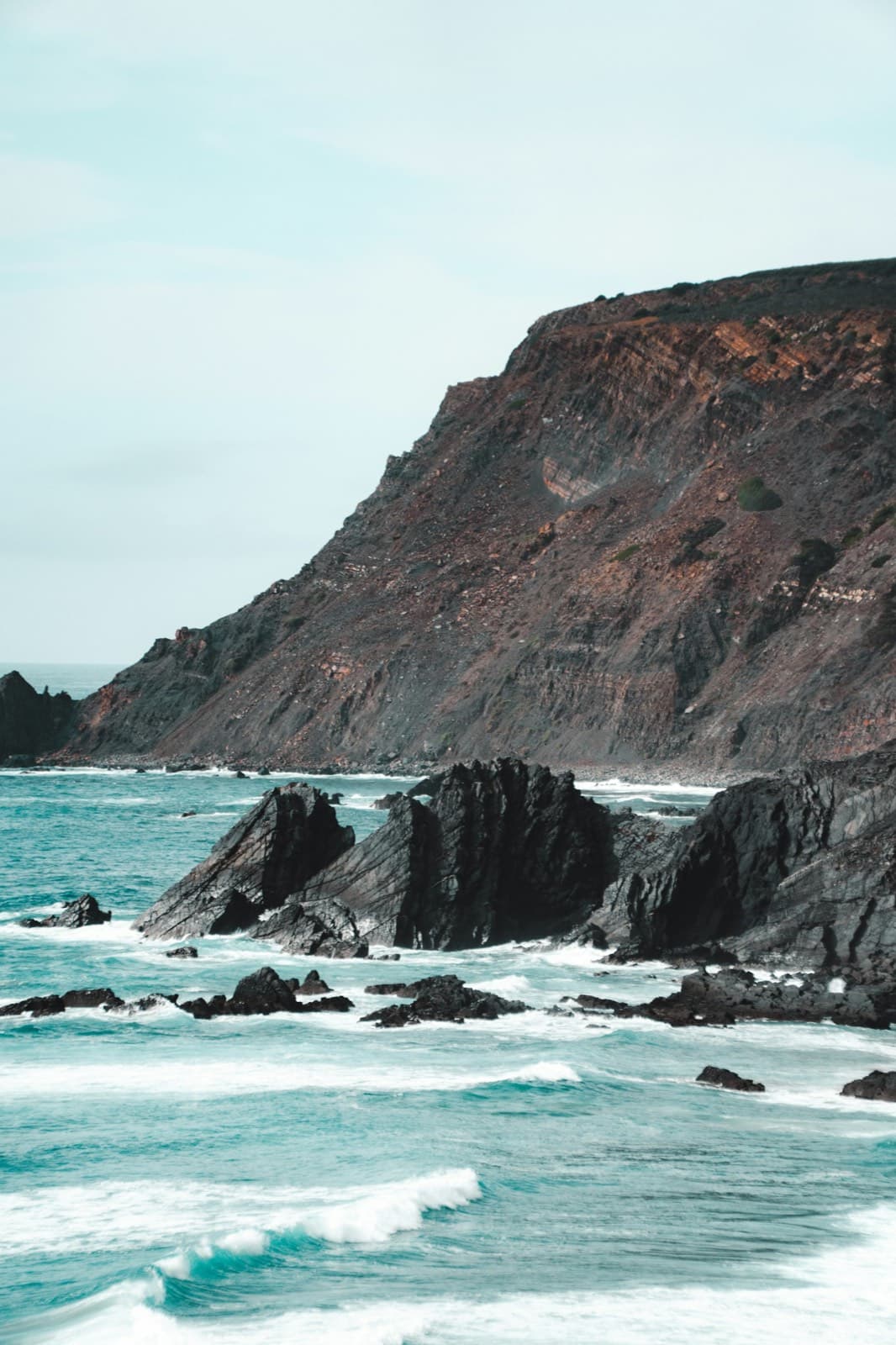
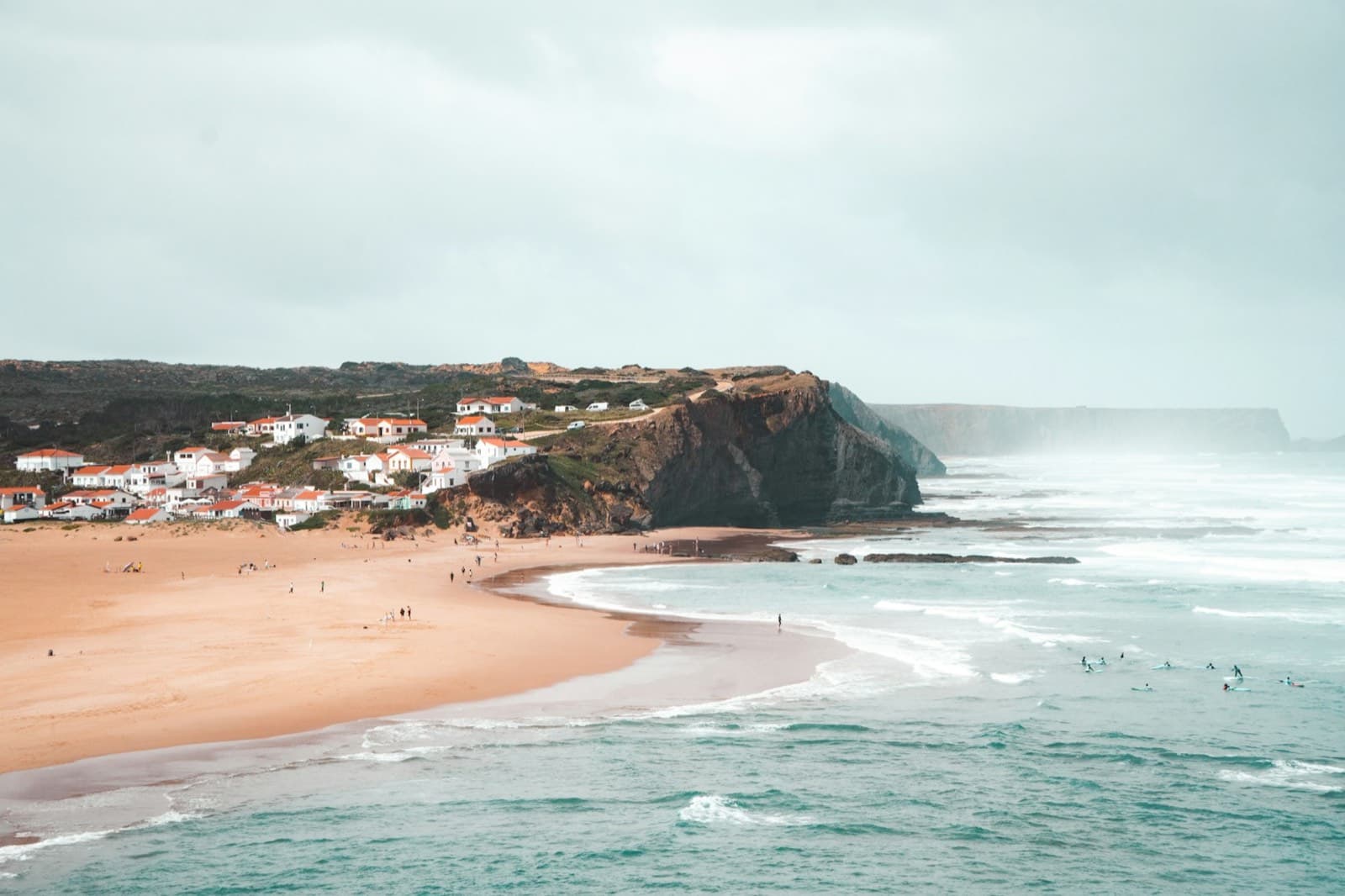
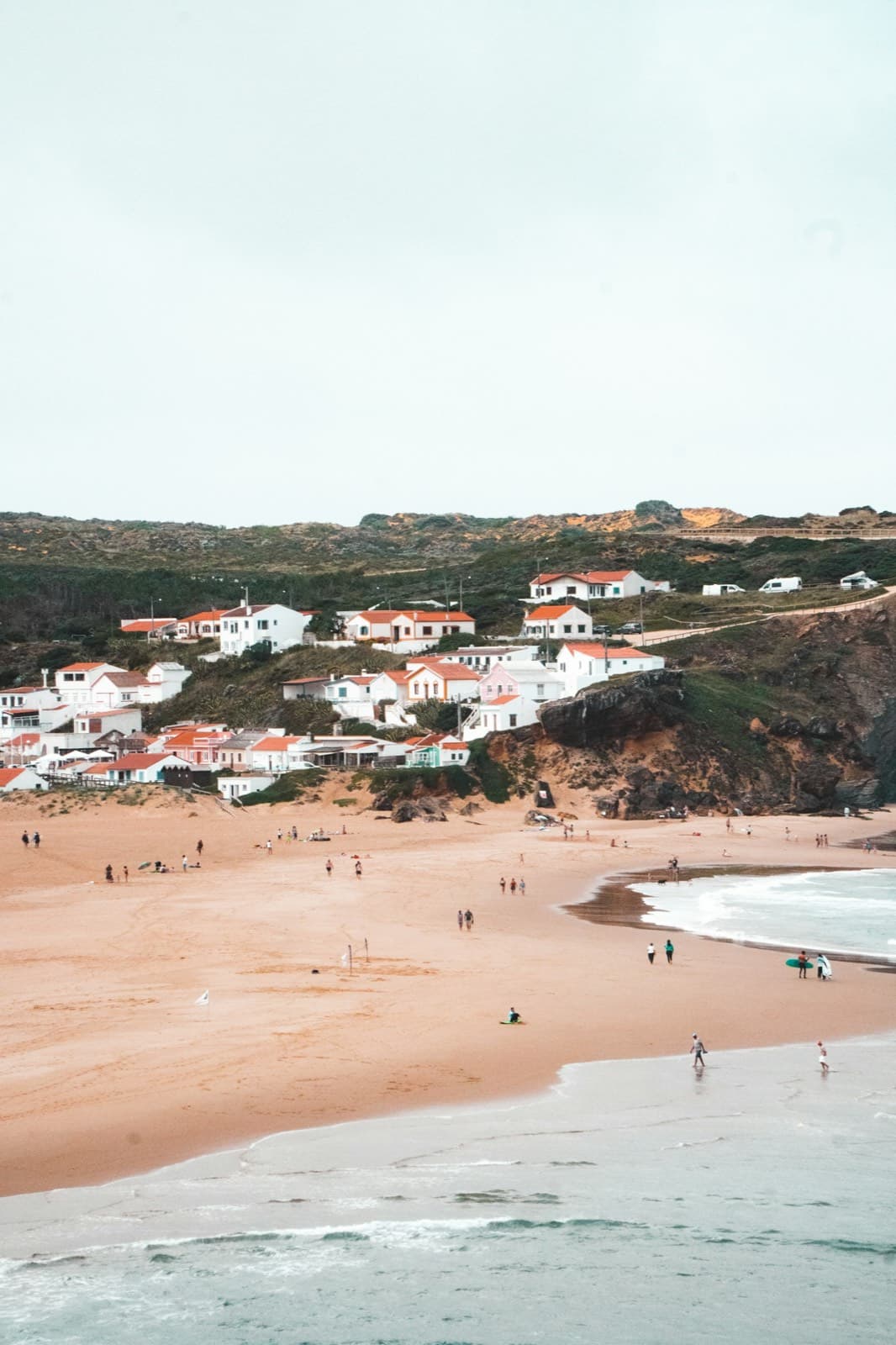
Praia da Arrifana is a 500-metre crescent of sand under dark cliffs, about 10 km south-west of Aljezur on the Costa Vicentina. It is one of the most consistent and learner-friendly beaches on the west Algarve, and busy because of it. The one thing to know: the headland at the north end blocks the prevailing north wind, so Arrifana often stays clean when more exposed beaches nearby are blown out.
At a glance
- Wave
- Beach break, Reef break · Lefts and rights
- Bottom
- Sand and rock
- Level
- Beginner, Intermediate
- Best swell
- NW, WNW, W
- Best wind
- NE, ENE, E
- Tide
- Low to mid tide
- Best months
- Sep–Mar
- Water
- 15–20 °C · 4/3 mm → 2 mm or spring suit
- Crowd
- Crowded
The surf at Arrifana
The main wave is a sand-bottom beach break with lefts and rights spread across the bay. The bay opens to the west-southwest and takes west and north-west swells, which bend around the northern headland and arrive more organised than on the open beaches. North-east to east winds are offshore, and the cliffs take the edge off northerlies. Most surfers prefer the lower half of the tide; at high tide the sand shrinks to a thin strip and the waves get dumpy.
On a normal day it suits beginners and intermediates, with the southern end usually a little bigger. When the swell is well overhead, Kangaroos (also written Kanguru) starts to break: a fast, hollow right at the northern end of the bay, near the small fishing harbour, over boulders that show in the lineup. It is for advanced surfers only. Autumn and winter bring the most power; summer is small, consistent and full of surf schools. Watch for rocks at both ends, currents on bigger days and loose boards in the crowd.
Photographing surf at Arrifana
The classic viewpoint is the ruined Fortaleza da Arrifana, built in 1635 on the northern headland. It looks down on the Kangaroos reef and across the whole bay to Pedra da Agulha, the needle-shaped sea stack at the southern end. The reef is a few hundred metres below and the beach peaks further out, so bring 200–600 mm for surfers and a wide lens for the bay. The clifftop road above the beach gives a second, closer angle on the beach break.
Because the bay faces roughly west-southwest, mornings are front-lit once the sun clears the cliffs behind you; early on, the tall cliffs can keep the inside in shade. By late afternoon the sun is over the sea: backlit spray, glare and silhouettes, better for wide shots of cliffs and rock than for faces. On small days the beach break is easy to swim with a water housing; keep clear of the reef and the lesson zones. The strongest images are a long right at Kangaroos against the dark cliffs, or a tiny surfer under the cliffs shot wide from above.
Getting there
Drive to Aljezur on the N120, roughly 1 h 30 min from Faro airport or 3 h from Lisbon, then follow signs to Praia da Arrifana through the village. The road down to the sand is steep and winding, and the lower parking is for residents, so park on the clifftop and walk down the steep path and steps. In summer the top parking fills early. The beach has restaurants, toilets, showers, surf schools with board rental and lifeguards in season.
Surfing or shooting here?
Surfing at Arrifana?
Post your surf plan with your dates. Photographers in the area can see it and offer to shoot your session.
Shooting at Arrifana?
Share your photos with the beach tagged. Surfers looking at Arrifana find your work and can message you.
Nearby spots
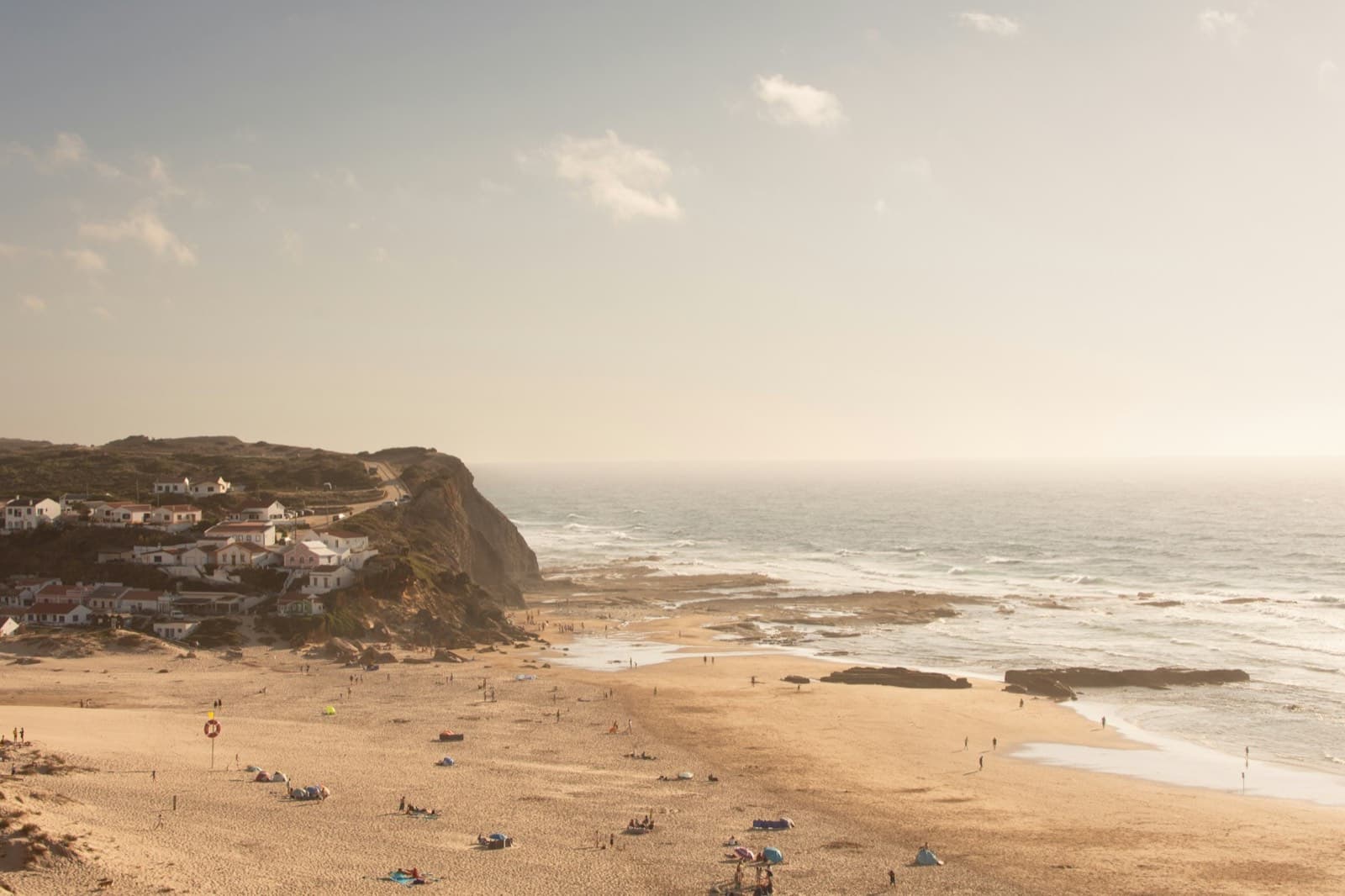 Monte ClérigoAljezur, Costa Vicentina · PortugalBeginner, Intermediate · Beach break
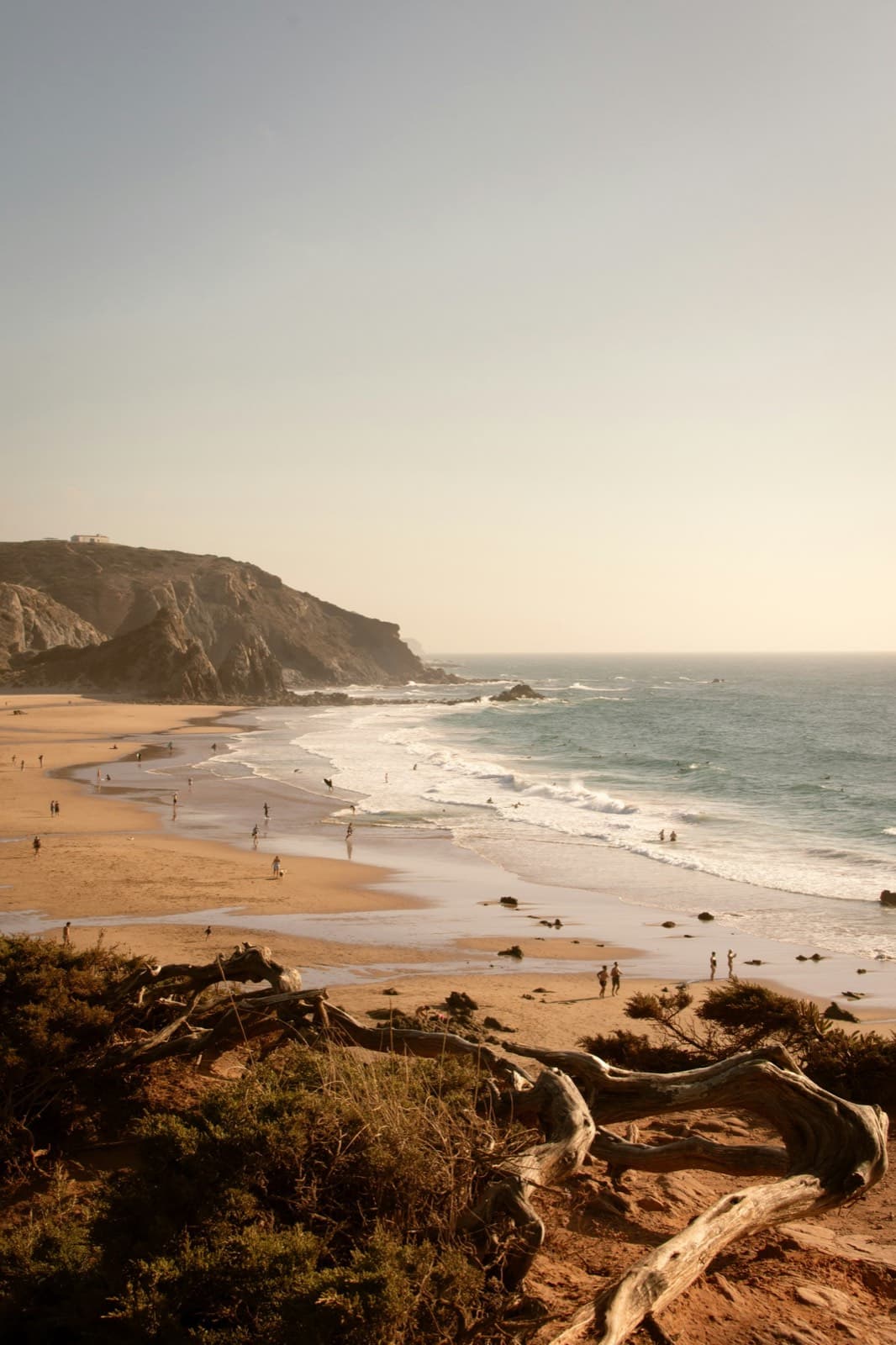 Praia do AmadoCarrapateira, Costa Vicentina · PortugalBeginner, Intermediate · Beach break
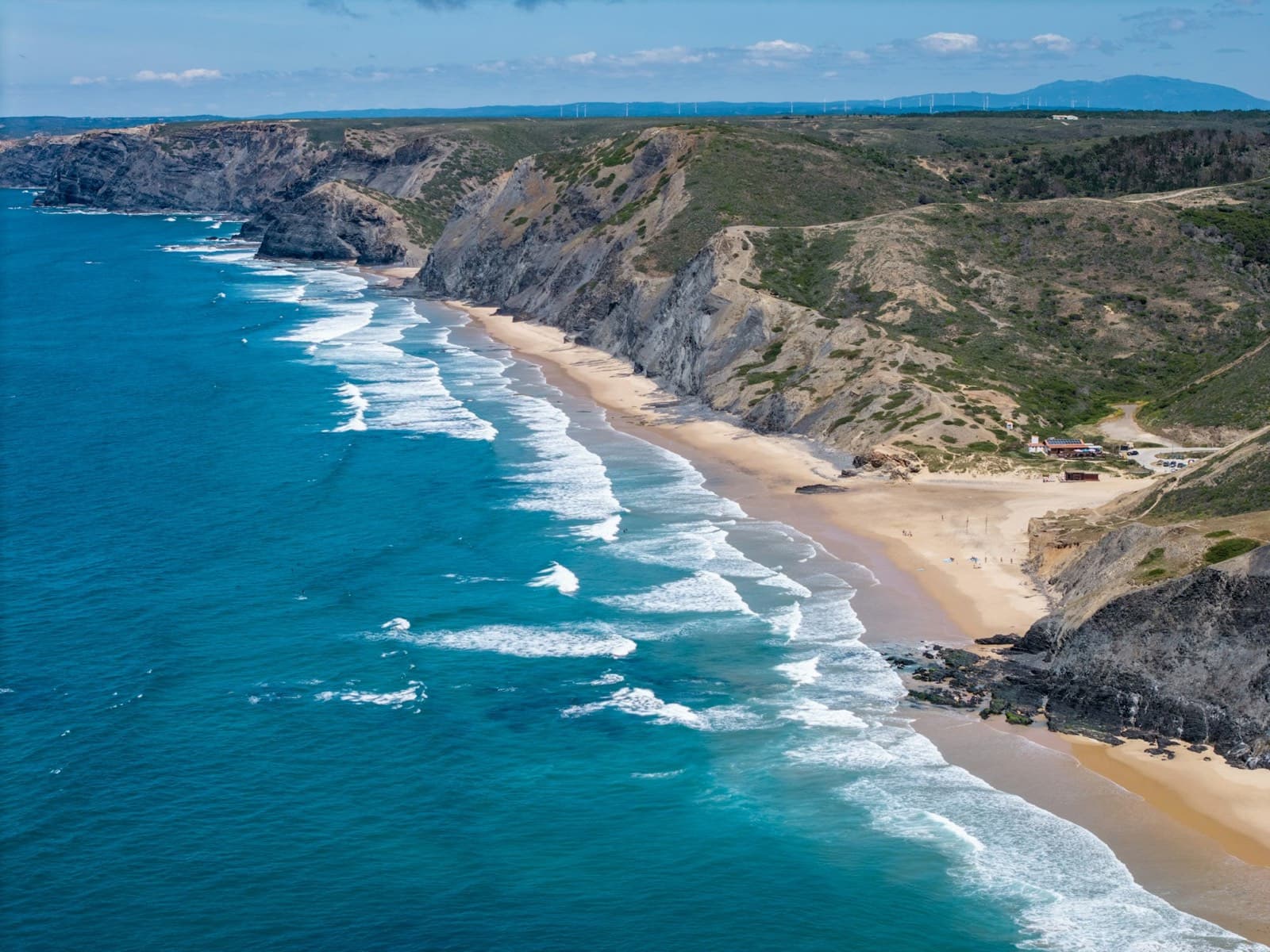 CordoamaVila do Bispo, Costa Vicentina · PortugalIntermediate, Advanced · Beach break
- ZavialRaposeira, Vila do Bispo · PortugalIntermediate, Advanced · Point break, Beach break
Frequently asked questions
When is the best time to surf Arrifana?
Autumn, from September to November, often brings the best mix of solid swell, lighter winds and still-mild water. Winter has the most power and is when the Kangaroos reef breaks. Summer is small but rarely flat, and the headland keeps the north wind off, which makes it a reliable learning beach in July and August. Aim for the lower half of the tide.
Is Arrifana good for beginners?
Yes. On normal summer and small autumn days the sand-bottom beach break is one of the better learning waves on the west Algarve, which is why surf schools work it daily. Stay in the middle of the beach, away from the rocks at both ends, skip big winter swells and never paddle out at the northern reef.
Where can you photograph surfing at Arrifana?
The best elevated angle is the Fortaleza da Arrifana viewpoint on the northern headland, looking down on the reef and across the bay; 200–600 mm works for surfers in the beach break. The clifftop road and the sand at low tide give closer angles. Morning light is the cleanest because the sun is behind you.
Does Arrifana work when the north wind blows?
Often, yes. The high headland at the north end shelters the bay from the prevailing northerlies, so Arrifana can stay rideable when more exposed beaches along the coast are choppy. Strong westerly or south-westerly winds blow straight into the bay, and on those days it turns messy.
How can I get photos of my surf session at Arrifana?
Post your surf plan on Makai with the dates you will be here, so photographers in the area can offer to shoot you, or browse surf photographers and message one before your session. Agree on what you will get before you paddle out.
Updated September 2026